


 eMoto
eMoto
🇿🇼 263781516585
MASHONALAND EAST · 3 MO · 👁️17 · ☆AD
...
Muriwo Available Farm Fresh @ Uzumba Village, 13 KM turnoff from Corner Store, Nyamapanda Highway, Mash East
Season Update: Derere, Chibage, Fodya
Muriwo Available Farm Fresh @ Uzumba Village, 13 KM turnoff from Corner Store, Nyamapanda Highway, Mash East
Season Update: Derere, Chibage, Fodya


0
0
🇿🇼 263781516585
MASHONALAND EAST · 12 DY · 👁️4
...
Fresh Derere Available
@Cornerstore
@Mutoko
@Mbare
WhatsApp 0781516585
Fresh Derere Available
@Cornerstore
@Mutoko
@Mbare
WhatsApp 0781516585

0
0
🇿🇼 2630717710653
MUTOKO · 1 MO · 👁️7
...
Mbula TV Repair in Mutoko
Mbula TV Repair in Mutoko

0
0
CHAN_70
H · 3 MO · 👁️20
...
🇿🇼 263781516585
MASHONALAND EAST · 3 MO · 👁️12
...
Inspiring Design
Inspiring Design

0
0
🇿🇼 263781516585
MASHONALAND EAST · 3 MO · 👁️10
...
Inspiring Design
Inspiring Design

0
0
🇿🇼 263111765432
· 3 MO · 👁️11
...

0
0
🇿🇼 263713685529
MUTOKO · 4 MO · 👁️25
...
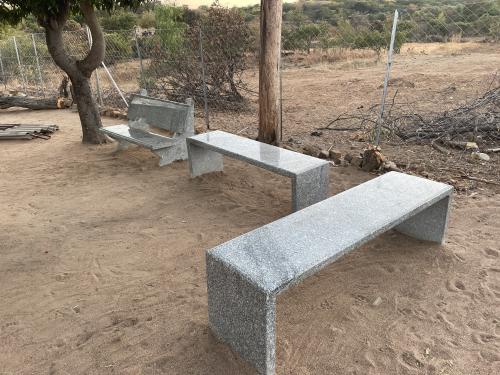
For all your Garden Benches contact LATENDO Granites.
GLOBAL ACCESSIBILITY
PROJECT COORDINOTOR: LAST KATIVHU
MUTOKO CELL: +263 71 368 5529
International
+263 78 376 3371
WhatsApp
+263 71 368 5529
For all your Garden Benches contact LATENDO Granites.
GLOBAL ACCESSIBILITY
PROJECT COORDINOTOR: LAST KATIVHU
MUTOKO CELL: +263 71 368 5529
International
+263 78 376 3371
WhatsApp
+263 71 368 5529

0
0
🇿🇼 263771070006
MUTOKO · 3 MO · 👁️14
...
Huku dzenyu dzawapo warungu wangu ● Mutoko center ● 0771070006
Huku dzenyu dzawapo warungu wangu ● Mutoko center ● 0771070006

0
0
CHAN_70
H · 4 MO · 👁️15 · EDUCATION, RESEARCH
...
Research:: Red Bricks for Energy Storage
How Bricks Can Store Electricity?
Advertisement
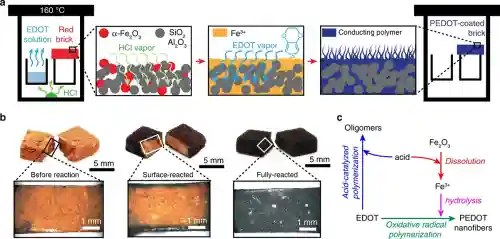
Naturally red bricks are highly porous, which provides us with a large surface area. According to researchers, a normal brick can be turned into a energy reservoir something like batteries but as I have mentioned they are supercapacitors; through a simple chemical treatment. Red bricks, which contain iron oxide (commonly known as rust). First, the red brick is exposed to hydrochloric acid vapor. The gas enters the pores of the brick and accumulates there. Then, a reaction occurs between the iron oxide and the acid vapor. In this reaction, the iron oxide dissolves in the acid vapor, resulting in the production of highly reactive Iron atom specifically Fe3+ cations.
Next, the brick is immersed in EDOT (ethylene dioxythiophene) vapor. EDOT is an organic sulfur compound that readily reacts with Fe3+, producing a conductive polymer called PEDOT (poly(3,4-ethylene-dioxythiophene)). This reaction takes place at around 160 degrees Celsius for approximately 14 hours.
As time passes, the PEDOT nanotubes gradually fill the porous structure of the brick. After the completion of the process, the nanotubes completely cover the brick, giving it a deep blue color.
Finally, an epoxy coating is applied to the brick, which acts as an electrolyte, binder, and separator. It also makes the brick waterproof, allowing it to be used even under water.
Research:: Red Bricks for Energy Storage
How Bricks Can Store Electricity?
Advertisement
Naturally red bricks are highly porous, which provides us with a large surface area. According to researchers, a normal brick can be turned into a energy reservoir something like batteries but as I have mentioned they are supercapacitors; through a simple chemical treatment. Red bricks, which contain iron oxide (commonly known as rust). First, the red brick is exposed to hydrochloric acid vapor. The gas enters the pores of the brick and accumulates there. Then, a reaction occurs between the iron oxide and the acid vapor. In this reaction, the iron oxide dissolves in the acid vapor, resulting in the production of highly reactive Iron atom specifically Fe3+ cations.
Next, the brick is immersed in EDOT (ethylene dioxythiophene) vapor. EDOT is an organic sulfur compound that readily reacts with Fe3+, producing a conductive polymer called PEDOT (poly(3,4-ethylene-dioxythiophene)). This reaction takes place at around 160 degrees Celsius for approximately 14 hours.
As time passes, the PEDOT nanotubes gradually fill the porous structure of the brick. After the completion of the process, the nanotubes completely cover the brick, giving it a deep blue color.
Finally, an epoxy coating is applied to the brick, which acts as an electrolyte, binder, and separator. It also makes the brick waterproof, allowing it to be used even under water.
6
0
🇿🇼 263781516585
MASHONALAND EAST · 4 MO · 👁️1
...
Red Brick Battery - AI Analysis & Method Overview:
Below is a focused, technical explanation of the chemistry and the high-level process that underlies converting a fired red clay brick into an electrochemical energy storage element. I do not provide step-by-step experimental recipes, concentrations, temperatures, or hands-on protocols — instead you get mechanisms, materials roles, device architecture, relevant equations, failure modes and scaling considerations so you understand exactly how it works and what determines performance.
1 — Materials chemistry: what’s in a red brick and why it matters
Major component: silicate clay matrix (largely inert alumino-silicates) — provides mechanical support and porosity.
Colorant / electroactive species: iron oxides (primarily hematite, Fe₂O₃; sometimes magnetite Fe₃O₄ or mixed oxides). Hematite is red because Fe is in the +3 oxidation state.
Porosity: firing leaves a porous microstructure with micron-scale pores and channels; high internal surface area is useful for electrochemical coatings and ion access.
Intrinsic conductivity: fired clay and hematite are poor electronic conductors compared with metals or carbon — this must be compensated by adding a conductive network.
2 — Electrochemical modes available in an iron-oxide/brick system
Two main types of charge storage are relevant:
A. Electric double-layer capacitance (EDLC)
Charge stored electrostatically at the interface between a conductive surface and the electrolyte.
Requires a high-surface-area, electronically conductive surface (typically carbon materials). ED
Red Brick Battery - AI Analysis & Method Overview:
Below is a focused, technical explanation of the chemistry and the high-level process that underlies converting a fired red clay brick into an electrochemical energy storage element. I do not provide step-by-step experimental recipes, concentrations, temperatures, or hands-on protocols — instead you get mechanisms, materials roles, device architecture, relevant equations, failure modes and scaling considerations so you understand exactly how it works and what determines performance.
1 — Materials chemistry: what’s in a red brick and why it matters
Major component: silicate clay matrix (largely inert alumino-silicates) — provides mechanical support and porosity.
Colorant / electroactive species: iron oxides (primarily hematite, Fe₂O₃; sometimes magnetite Fe₃O₄ or mixed oxides). Hematite is red because Fe is in the +3 oxidation state.
Porosity: firing leaves a porous microstructure with micron-scale pores and channels; high internal surface area is useful for electrochemical coatings and ion access.
Intrinsic conductivity: fired clay and hematite are poor electronic conductors compared with metals or carbon — this must be compensated by adding a conductive network.
2 — Electrochemical modes available in an iron-oxide/brick system
Two main types of charge storage are relevant:
A. Electric double-layer capacitance (EDLC)
Charge stored electrostatically at the interface between a conductive surface and the electrolyte.
Requires a high-surface-area, electronically conductive surface (typically carbon materials). EDLC is non-faradaic and fast.
B. Pseudocapacitance / battery-like faradaic processes
Transition metal oxides (including certain iron oxides under appropriate conditions) can participate in reversible surface or near-surface redox reactions (Fe³⁺ ⇄ Fe²⁺), giving faradaic charge storage that behaves like capacitive or battery behavior depending on kinetics and depth of insertion.
Conducting polymers (e.g., PEDOT, polyaniline) also provide pseudocapacitance via rapid redox transitions coupled to ion insertion.
A brick device will typically be a hybrid: a conductive coating + redox-active species enabling a mix of EDLC and pseudocapacitance.
3 — Key chemical mechanisms
Oxidative polymerization of conductive polymer on iron-oxide surfaces (conceptual):
Monomers such as 3,4-ethylenedioxythiophene (EDOT) can be polymerized into PEDOT via an oxidative route. Metal oxides or soluble oxidants oxidize the monomer radical, which then couples to form polymer chains.
When polymerization occurs in situ inside porous media, the polymer coats internal surfaces, creating a continuous conductive skin that conforms to the pore network. Hematite’s surface redox chemistry and surface defects can help initiate or template polymer growth.
Electron/ion transport network:
The electrically poor iron oxide/clay must be supplemented by a continuous electronic conductor: conductive polymer, conductive carbon (graphitic flakes, nanotubes), or embedded metal current collectors. The network must percolate to provide low electronic resistance to external contacts.
Ionic transport occurs through the electrolyte within pores; pore size distribution and tortuosity control ionic resistance and rate capability.
Charge storage reactions (examples at conceptual level):
Surface redox on iron centers: Fe³⁺ + e⁻ ↔ Fe²⁺ (surface or near-surface). This contributes pseudocapacitive charge if the redox is fast and surface-limited. Deeper conversion to non-stoichiometric oxides or intercalation may behave more like a battery (slower, larger structural change).
Conducting polymer redox: PEDOT(oxidized) + e⁻ + cation ↔ PEDOT(reduced·cation-doped). This is a highly reversible, fast pseudocapacitive process when polymer morphology and ion access are optimized.
4 — Electrode architecture (what must be achieved, conceptually)
Porous host (brick): mechanical scaffold and high internal surface area.
Conductive coating network: conformal conductive polymer and/or carbon to turn the internal surfaces into electronically accessible electrode area. Conductivity and contact to a current collector are critical.
Electrolyte-filled pores / separator: an ionic medium that wets the pores and permits ion migration; stable electrochemical window relative to the redox couples used.
Current collectors / terminals: macroscopic low-resistance metal contacts bonded to the conductive network so external circuits see low series resistance.
5 — Performance metrics and governing equations
Capacitance (C): where is charge stored, is voltage. For areal or volumetric metrics: , .
Energy density (per device): (for predominantly capacitive devices). For faradaic systems, integrate voltage vs charge for energy.
Power and ESR: instantaneous power limited by equivalent series resistance (ESR): . Low ESR requires good electronic contacts and short ionic paths.
Rate capability: controlled by ion diffusion in pores and electron transport in the conductive network; characteristic time .
Cycle life: determined by mechanical/chemical stability of redox hosts and the electrolyte; conducting polymers can degrade if over-oxidized or if large volumetric changes occur.
6 — High-level process flow (non-actionable)
(Provided only as conceptual stages; not as experimental instructions.)
- Surface preparation: remove loose dust and contaminants so coatings can adhere and penetrate pores.
- Forming a conductive network on pore surfaces: deposit or grow a conductive phase that intimately coats internal surfaces (options conceptually include in-situ oxidative polymerization of a conductive polymer, infiltration with conductive carbon slurries, or electrochemical deposition). The aim is to convert the internal surface from insulating to electronically conductive with minimal pore blockage.
- Introduce redox-active species where desirable: either use the native iron oxide surface to provide pseudocapacitance or supplement with other redox oxides/compounds that can be immobilized on the conductive network.
- Integrate current collectors and terminals: make low-resistance macroscopic contacts to the conductive network.
- Electrolyte infusion and sealing: wet the pore network with a stable electrolyte chosen for ionic conductivity and electrochemical stability within the intended operating voltage, and then seal to prevent drying and contamination.
- Electrochemical conditioning and testing: measure open-circuit potential, perform cyclic voltammetry and galvanostatic charge/discharge to characterize capacitance, ESR, and cycle behavior.
7 — Choice tradeoffs (what controls success)
Conductivity vs. accessible surface: thick conductive coatings raise conductivity but can block pores and reduce accessible surface area. A balance is essential.
Pseudocapacitance vs. stability: deep redox transformations in iron oxides increase stored charge but can cause structural changes and capacity fade. Surface-confined redox is steadier.
Electrolyte window: limits usable voltage. A larger voltage window gives more energy (E ∝ V²) but may trigger side reactions or oxidation of organics (conducting polymer) or water splitting.
Mechanical integrity & moisture control: expansion/contraction, salt crystallization, or microbial growth in damp electrolytes can ruin performance over time.
8 — Diagnostics and characterization (how to verify behavior)
Electrochemical impedance spectroscopy (EIS): separate ionic resistance, charge-transfer resistance, and capacitance.
Cyclic voltammetry (CV): distinguishes capacitive (rectangular CV) from faradaic/battery behavior (peaks).
Galvanostatic charge/discharge: gives practical capacitance, coulombic efficiency, ESR (from IR drop), and cycle life.
Microscopy / spectroscopy: SEM to inspect coating uniformity and pore filling; XPS/Raman to probe chemical state of iron and polymer doping.
9 — Failure modes & longevity risks
Loss of conductivity: detachment/oxidation of conductive coating, breakage of percolation pathways.
Electrolyte loss/degradation: drying or chemical breakdown, leading to increased ionic resistance.
Side reactions: oxidation or hydrolysis of polymer or dissolution of iron species; gas evolution if voltage exceeds electrolyte stability.
Mechanical degradation: cracking, pore collapse, or delamination due to volume changes.
10 — Practical constraints (concise)
Energy density achievable by such a hybrid brick device is modest compared with Li-ion cells; higher specific energy requires different chemistries.
Strength of contact and low ESR are the most immediate engineering bottlenecks for delivering usable power.
Scalability looks promising conceptually (walls as distributed storage) but requires robust, weatherproof sealing and safety considerations.
11 — Safety reminder
Work with electrochemical cells, oxidants, monomers, and organic polymers only in appropriate laboratory settings using proper personal protective equipment and disposal procedures. Experimental chemical procedures can pose fire, toxicity and environmental hazards; do not perform them without training and proper facilities.
---
If you want a deeper dive in any one area, tell me which: (A) detailed electrochemical signatures and how to interpret CV/EIS data for these materials, (B) comparative energetics and theoretical maximums using real numbers and calculations, or (C) device architecture sketches (electrical models, ESR components, and how to connect multiple bricks). I will provide conceptual but non-procedural technical detail.
🇿🇼 263781516585
MASHONALAND EAST · 4 MO · 👁️1 · ARTICLE, SCIENCE, RED BRICK, BATTERY
...
Sci-Tech Article:
https://scitechdaily.com/storing-electrical-energy-in-red-bricks-walls-could-act-as-huge-batteries/
Imagine plugging into your brick house.
Red bricks — some of the world’s cheapest and most familiar building materials — can be converted into energy storage units that can be charged to hold electricity, like a battery, according to new research from Washington University in St. Louis.
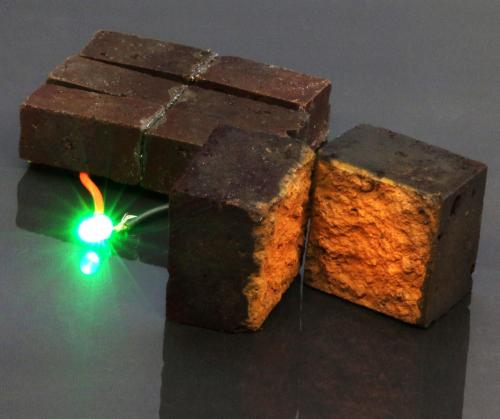
Brick has been used in walls and buildings for thousands of years, but rarely has been found fit for any other use. Now, chemists in Arts & Sciences have developed a method to make or modify “smart bricks” that can store energy until required for powering devices. A proof-of-concept published on August 11, 2020, in Nature Communications shows a brick directly powering a green LED light.
“Our method works with regular brick or recycled bricks, and we can make our own bricks as well,” said Julio D’Arcy, assistant professor of chemistry. “As a matter of fact, the work that we have published in Nature Communications stems from bricks that we bought at Home Depot right here in Brentwood (Missouri); each brick was 65 cents.”
Walls and buildings made of bricks already occupy large amounts of space, which could be better utilized if given an additional purpose for electrical storage. While some architects and designers have recognized the humble brick’s ability to absorb and store the sun’s heat, this is the first time anyone has tried using bricks as anything more than thermal mass for heating and cooling.
D’Arcy an
Sci-Tech Article:
https://scitechdaily.com/storing-electrical-energy-in-red-bricks-walls-could-act-as-huge-batteries/
Imagine plugging into your brick house.
Red bricks — some of the world’s cheapest and most familiar building materials — can be converted into energy storage units that can be charged to hold electricity, like a battery, according to new research from Washington University in St. Louis.
Brick has been used in walls and buildings for thousands of years, but rarely has been found fit for any other use. Now, chemists in Arts & Sciences have developed a method to make or modify “smart bricks” that can store energy until required for powering devices. A proof-of-concept published on August 11, 2020, in Nature Communications shows a brick directly powering a green LED light.
“Our method works with regular brick or recycled bricks, and we can make our own bricks as well,” said Julio D’Arcy, assistant professor of chemistry. “As a matter of fact, the work that we have published in Nature Communications stems from bricks that we bought at Home Depot right here in Brentwood (Missouri); each brick was 65 cents.”
Walls and buildings made of bricks already occupy large amounts of space, which could be better utilized if given an additional purpose for electrical storage. While some architects and designers have recognized the humble brick’s ability to absorb and store the sun’s heat, this is the first time anyone has tried using bricks as anything more than thermal mass for heating and cooling.
D’Arcy and colleagues, including Washington University graduate student Hongmin Wang, first author of the new study, showed how to convert red bricks into a type of energy storage device called a supercapacitor.
“In this work, we have developed a coating of the conducting polymer PEDOT, which is comprised of nanofibers that penetrate the inner porous network of a brick; a polymer coating remains trapped in a brick and serves as an ion sponge that stores and conducts electricity,” D’Arcy said.
The red pigment in bricks — iron oxide, or rust — is essential for triggering the polymerization reaction. The authors’ calculations suggest that walls made of these energy-storing bricks could store a substantial amount of energy.
“PEDOT-coated bricks are ideal building blocks that can provide power to emergency lighting,” D’Arcy said. “We envision that this could be a reality when you connect our bricks with solar cells — this could take 50 bricks in close proximity to the load. These 50 bricks would enable powering emergency lighting for five hours.
“Advantageously, a brick wall serving as a supercapacitor can be recharged hundreds of thousands of times within an hour. If you connect a couple of bricks, microelectronics sensors would be easily powered.”
Reference: “Energy storing bricks for stationary PEDOT supercapacitors” by Hongmin Wang, Yifan Diao, Yang Lu, Haoru Yang, Qingjun Zhou, Kenneth Chrulski and Julio M. D’Arcy, 11 August 2020, Nature Communications.
DOI: 10.1038/s41467-020-17708-1
🇿🇼 263781516585
MASHONALAND EAST · 4 MO · 👁️1
...
Method Diagram
Method Diagram
🇿🇼 263781516585
MASHONALAND EAST · 4 MO · 👁️1
...
Extensive Descriptive Article:
https://futuredisruptor.com/energy-storing-bricks/
Imagine walls storing sunshine and releasing it at night, buildings powering themselves, and grids resilient against disruptions. This is the promise of future energy storing bricks. These innovative bricks integrate seamlessly into walls, capture excess renewable energy, smooth out the grid, and reduce reliance on fossil fuels.
Energy storing bricks are a novel form of concrete that aims to transform ordinary bricks into devices that can store electricity and power devices. It uses a chemical process to convert the red pigment in standard bricks into a conductive plastic that coats the pores inside the bricks. This plastic acts as a supercapacitor, quickly storing and releasing large amounts of charge. They can create intelligent, sustainable buildings that reduce carbon emissions and save energy.
They are also known as ElectroBricks, Smart Bricks, Energy Harvesting Bricks, and PEDOT Bricks.
Table of Contents
Practical Applications
Importance for Our Future
How Does It Work?
Evolve in the Future
Help Organizations/Enterprises
Driving Adoption
Operational Challenges
Success Stories
Types
Advantages
Disadvantages
Ethical Concerns
Governance and Regulation
History
Tools and Services
How to Get Started?
Best Practices
Related Terms
Learn more
Research papers
Books
Courses
Documentaries
energy storing bricks nanofibrillar PEDOT-coated
Core-shell architecture of a nanofibrillar PE
Extensive Descriptive Article:
https://futuredisruptor.com/energy-storing-bricks/
Imagine walls storing sunshine and releasing it at night, buildings powering themselves, and grids resilient against disruptions. This is the promise of future energy storing bricks. These innovative bricks integrate seamlessly into walls, capture excess renewable energy, smooth out the grid, and reduce reliance on fossil fuels.
Energy storing bricks are a novel form of concrete that aims to transform ordinary bricks into devices that can store electricity and power devices. It uses a chemical process to convert the red pigment in standard bricks into a conductive plastic that coats the pores inside the bricks. This plastic acts as a supercapacitor, quickly storing and releasing large amounts of charge. They can create intelligent, sustainable buildings that reduce carbon emissions and save energy.
They are also known as ElectroBricks, Smart Bricks, Energy Harvesting Bricks, and PEDOT Bricks.
Table of Contents
Practical Applications
Importance for Our Future
How Does It Work?
Evolve in the Future
Help Organizations/Enterprises
Driving Adoption
Operational Challenges
Success Stories
Types
Advantages
Disadvantages
Ethical Concerns
Governance and Regulation
History
Tools and Services
How to Get Started?
Best Practices
Related Terms
Learn more
Research papers
Books
Courses
Documentaries
energy storing bricks nanofibrillar PEDOT-coated
Core-shell architecture of a nanofibrillar PEDOT-coated brick electrode lights up a green LED. Credit: D’Arcy Laboratory, Department of Chemistry, Washington University in St. Louis.
Practical Applications
Some of the practical applications of energy storing bricks are:
Intelligent and sustainable buildings: They can be integrated into walls and coupled with solar panels to provide emergency power and lighting in case of power outages or emergencies. Also, it reduces buildings’ energy consumption and carbon footprint by storing excess solar energy during the day and releasing it at night.
Portable and flexible devices: They can create lightweight and flexible devices powered by bricks or external sources. For example, we can make wearable electronics, sensors, or displays attached to clothing or other surfaces.
Low-cost and accessible energy storage: They can be made from common and inexpensive materials, such as bricks, conductive polymers, and gel electrolytes. They can be easily manufactured and installed using existing brick-making and construction techniques. They can provide a low-cost and accessible solution for energy storage in remote or underdeveloped areas.
Importance for Our Future
Energy-storing bricks are game-changers for our future. They smooth out renewable energy fluctuations, empower communities with decentralized power, and seamlessly integrate into buildings, all at a cost-effective scale. They are a promising invention that could change the future of energy and sustainability.
How Does It Work?
Here is the step-by-step process overview of how energy storing bricks work:
Prepare a mixture of hydrochloric acid and water, and heat it to 160°C. This acid vapor will dissolve the iron oxide in the bricks and release ferric ions.
Place the bricks in a chamber and expose them to the acid vapor for about 10 minutes. This will turn the bricks from red to gray, indicating that the iron oxide has been converted to a reactive form of iron.
Prepare a mixture of ethylenedioxythiophene (EDOT) and water, and heat it to 80°C. This monomer vapor will polymerize in the presence of the ferric ions and create PEDOT nanofibers.
Place the bricks in another chamber and expose them to the monomer vapor for about 15 minutes. This will turn the bricks from gray to blue, indicating that PEDOT nanofibers have filled the pores.
Prepare a gel electrolyte by dissolving sodium hydroxide and sodium sulfate in water and adding polyvinyl alcohol. This is the substance that will allow the movement of ions between the brick electrodes.
Sandwich two brick electrodes with the gel electrolyte in between and seal the edges with epoxy. This will complete the supercapacitor brick, which can be connected to a power source and charged or discharged.
Evolve in the Future
Some of the ways that energy storing bricks can evolve in the future are:
Increase the energy the bricks store using different types of conductive polymers, additives, or composites. This could improve the performance and efficiency of these bricks.
Scale up the production and installation of the bricks by using existing brick-making and construction techniques or by developing new methods such as 3D printing. This could reduce the cost and time of making and using the bricks.
Integrate the bricks with renewable energy sources like solar panels, wind turbines, or biofuels. This could create an innovative and sustainable energy system that can power various applications and devices.
Charge electric vehicles directly from walls.
Provide backup power for critical infrastructure.
Power off-grid communities.
Developing new applications, we can not imagine yet.
Help Organizations/Enterprises
Some of the ways that energy storing bricks can help organizations and enterprises and create business opportunities are:
They can lower energy costs and improve the energy efficiency of buildings by storing excess solar energy during the day and releasing it at night. This can also reduce the dependence on fossil fuels and the grid and increase the resilience to power outages or emergencies.
They can enhance the functionality and design of buildings by integrating intelligent and flexible devices powered by the bricks themselves or external sources. For example, these bricks can power wearable electronics, sensors, or displays attached to clothing or other surfaces.
They can provide a low-cost and accessible solution for energy storage in remote or underdeveloped areas where resources are scarce or expensive. They can be made from common, inexpensive materials like bricks, conductive polymers, and gel electrolytes. Using existing brick-making and construction techniques, energy-storing bricks can be easily manufactured and installed.
Driving Adoption
The main factors driving the adoption of energy storing bricks technology are the increasing demand for renewable energy sources, the need for energy efficiency and conservation, and the development of smart and green buildings.
They could offer a solution for storing excess solar or wind energy and using it when needed, reducing the reliance on fossil fuels and the grid. They could also enable the creation of self-powered sensors and devices to monitor and control various aspects of the building environment, such as temperature, humidity, air quality, and security. They could also enhance bricks’ aesthetic appeal and functionality, making them more attractive for architects and designers.
Operational Challenges
Energy-storing bricks are still in the early stages of development and face some challenges in their operationalization. Some of the main challenges are:
Improving the energy density: They have a relatively low energy density compared to conventional batteries, which means they can store less energy per unit volume or mass. This limits the amount of energy that can be stored and delivered, especially for applications that require high power or long duration. Researchers enhance energy density by optimizing the materials, structures, and processes of creating supercapacitors.
Scaling up the production: They require a unique coating process to convert ordinary bricks into supercapacitors, which involves applying a conductive polymer and an electrolyte to the brick surface. This process is currently done manually in a laboratory setting, which is time-consuming and costly. The production process must be automated, scaled up, and integrated with the existing brick manufacturing industry to make them commercially viable.
Increasing durability: They are exposed to various environmental factors, such as moisture, temperature, and mechanical stress, which could affect their performance and lifespan. They must withstand these conditions and maintain their functionality over multiple charge-discharge cycles. Researchers are testing the durability under different scenarios and developing protective coatings and encapsulations to enhance their stability.
Ensuring compatibility: They must be compatible with the existing electrical infrastructure, building codes, and safety and environmental standards. They must have reliable and efficient interfaces and connections with the power sources, loads, and controllers. They must also comply with the regulations and specifications for building materials and fire safety.
These are some significant challenges. However, these challenges also present opportunities for innovation and improvement, and it has the potential to overcome them and become a game-changer in energy storage.
energy storing bricks microstructure
Photograph of a commercially available brick, as well as analysis of its microstructure, before and after it is coated with the polymer poly(3,4-ethylenedioxythiophene) to become an energy-storage module. Credit: D’Arcy Research Laboratory, Washington University in St. Louis.
Success Stories
Some of the success stories of energy storing bricks are:
Washington University in St. Louis researchers have developed a method to convert conventional bricks into supercapacitors by depositing conductive polymer nanofibers in their pores. They demonstrated that three brick supercapacitors connected in tandem could power a green LED light for up to 15 minutes. They also showed that the bricks could be recharged 10,000 times and withstand various environmental conditions.
University of the West of England researchers have created living bricks that use microbes to generate electricity from urine and wastewater. They used 3D printing to develop hollow bricks containing microbial fuel cells to break down organic matter and produce electrons. They stacked the bricks to form a wall to power devices such as fans and lights.
Indian Institute of Technology Madras researchers have designed bricks to store thermal energy and regulate indoor temperature. They used phase change materials, which can absorb and release heat during phase transitions, to fill the cavities of clay bricks. They tested the bricks in a model house and found they could reduce the cooling load by 28% and the heating load by 19%.
Types
Here are some of the types of energy storing bricks:
Supercapacitor bricks: These are bricks that are coated with a conductive polymer and an electrolyte to create supercapacitors, which are fast-charging and high-power energy storage units. These can be connected to solar panels or other renewable energy sources to store excess electricity and use it when needed.
Microbial fuel cell bricks: These bricks contain microbial fuel cells, devices that use microbes to generate electricity from organic matter, such as urine or wastewater. These can be stacked to form a wall that can power sensors or devices in the building.
Thermal energy storage bricks: These are bricks filled with phase change materials, substances that can absorb and release heat during phase transitions, such as melting or freezing. They can regulate the indoor temperature and reduce the cooling or heating load of the building.
Advantages
Here are some of the advantages of energy storing bricks:
Lower cost: They can utilize the existing brick manufacturing industry and infrastructure, reducing the need for additional materials and equipment. They can also leverage the abundant and cheap availability of bricks, one of the most common building materials in the world.
Longer lifespan: They can offer longer than conventional batteries, as they can withstand more charge-discharge cycles and environmental conditions. They can also avoid the degradation and disposal issues associated with batteries containing toxic and hazardous substances.
Higher safety: They can provide more protection than conventional batteries, as they do not pose the risk of fire, explosion, or leakage. They can also prevent overheating and overcharging problems that damage batteries and affect their performance.
Easier integration: They can enable the integration of energy storage into buildings without requiring additional space or wiring. They can also enhance bricks’ aesthetic appeal and functionality, making them more attractive for architects and designers.
Disadvantages
Here are the disadvantages of energy storing bricks in addition to the ones highlighted above in this Future Disruptor discourse.
Production capacity: They require a unique coating process to convert ordinary bricks into supercapacitors, which involves applying a conductive polymer and an electrolyte to the brick surface. This process is currently done manually in a laboratory setting, which is time-consuming and effort-intensive. The production process must be automated, scaled up, and integrated with the existing brick manufacturing industry to make them commercially viable.
Low durability: They are exposed to various environmental factors, such as moisture, temperature, and mechanical stress, which could affect their performance and lifespan. They must withstand these conditions and maintain their functionality over multiple charge-discharge cycles.
Ethical Concerns
Here are some of the ethical concerns associated with energy storing bricks:
Environmental impact: They could positively affect the environment by reducing the reliance on fossil fuels and the grid and enabling the integration of renewable energy sources into buildings. They can adversely affect the environment by increasing the demand for bricks, leading to more mining, deforestation, and emissions. They could also pose risks of leakage, contamination, or disposal of the conductive polymer and the electrolyte used to create the supercapacitors.
Social justice: They could positively affect social justice by providing low-income and marginalized communities access to affordable and reliable energy, especially in remote or rural areas. They can negatively affect social justice by creating or exacerbating inequalities, conflicts, or dependencies among different groups of people, depending on the availability, distribution, and ownership of the bricks and the energy they store. They can raise privacy, security, or consent issues, especially if the bricks power sensors or devices to monitor or control the building occupants.
Human dignity: They could positively affect human dignity by enhancing bricks’ aesthetic appeal and functionality and allowing people to express their creativity and identity by choosing bricks and their arrangement. They can negatively affect human dignity by reducing the naturalness and authenticity of bricks and modifying or objectifying them as mere energy storage units. They can challenge the human-nature relationship significantly if the bricks are altered with living organisms, such as microbes, to generate electricity.
Governance and Regulation
Here are some of the ways we can govern and regulate the concerns associated with energy storing bricks:
Establishing standards and guidelines: They must have clear and consistent standards for production, installation, operation, maintenance, and disposal. These standards and policies should ensure quality, safety, performance, and compatibility with the existing electrical infrastructure and building codes. They should also address environmental and social impacts, such as emissions, waste, recycling, and access.
Promoting innovation and collaboration: They must foster innovation and collaboration among various stakeholders, such as researchers, developers, manufacturers, users, and regulators. These stakeholders should share their knowledge, expertise, and resources to advance and explore its applications in various fields. They should also engage in dialogue and consultation to identify opportunities and challenges and find beneficial solutions.
Ensuring accountability and transparency: They need to have mechanisms for accountability and transparency that can monitor and evaluate its impacts and outcomes. These mechanisms should involve independent and impartial audits, assessments, and reviews that can verify compliance and performance. They should also involve public and stakeholder participation and feedback that can inform and improve them and their governance and regulation.
History
While energy storage has been around for centuries, the specific technology of energy storing bricks has been a relatively new development in the past decade. However, the groundwork for this innovative technology was laid much earlier. Here is a timeline of key milestones in its history:
Early Foundations:
1745: Ewald Georg von Kleist invents the first capacitor, laying the groundwork for energy storage in electrical devices. This early device could store and release electrical charge but with limited capacity and efficiency.
1859: Gaston Planté invents the lead-acid battery, a breakthrough in rechargeable energy storage. Lead-acid batteries offer significantly higher capacity and efficiency than capacitors, making them practical for various applications like powering vehicles and lighting.
🇿🇼 263781516585
MASHONALAND EAST · 4 MO · 👁️0
...
🇿🇼 263781516585
MASHONALAND EAST · 4 MO · 👁️0
...
Smart Energy Brick Research PDF
Smart Energy Brick Research PDF
CHAN_70
H · 3 MO · 👁️12 · EDUCATION, RESEARCH
...
Research: Sound In Plants
https://pmc.ncbi.nlm.nih.gov/articles/PMC7671032/
There is not much knowledge about sound communication in plants, but it is known that these can produce sound waves at relatively low frequencies such as 50–120 Hz. Plants emit also ultrasonic vibrations of 20–100 kHz, measured by connecting a sensor directly to the stem of the plant.14 Plants release sound emissions from different organs and at different growth stages or in response to different situations. Through the use of small highly sensitive sound receivers, it has been shown that plants emit sound from the xylem15 and faint ultrasound in case of stress.16 Plants can hear caterpillar’s chewing and set up the appropriate defenses17 but they can also hear the moving close of a pollinator using flowers as “ears” and responding with minutes by sweetening the nectar.18
Research: Sound In Plants
https://pmc.ncbi.nlm.nih.gov/articles/PMC7671032/
There is not much knowledge about sound communication in plants, but it is known that these can produce sound waves at relatively low frequencies such as 50–120 Hz. Plants emit also ultrasonic vibrations of 20–100 kHz, measured by connecting a sensor directly to the stem of the plant.14 Plants release sound emissions from different organs and at different growth stages or in response to different situations. Through the use of small highly sensitive sound receivers, it has been shown that plants emit sound from the xylem15 and faint ultrasound in case of stress.16 Plants can hear caterpillar’s chewing and set up the appropriate defenses17 but they can also hear the moving close of a pollinator using flowers as “ears” and responding with minutes by sweetening the nectar.18
0
0
🇿🇼 263781516585
MASHONALAND EAST · 4 MO · 👁️15
...
Nhasi
Nhasi

0
0
🇿🇼 263781516585
MASHONALAND EAST · 4 MO · 👁️11
...
Nhasi
Nhasi

0
0
🇿🇼 263781516585
MASHONALAND EAST · 4 MO · 👁️11 · JOKES
...
Does he know December is coming?
Does he know December is coming?

0
0
🇿🇼 263781516585
MASHONALAND EAST · 4 MO · 👁️9
...
Rain season is here
Mvura iri kunaya
Rain season is here
Mvura iri kunaya

0
0